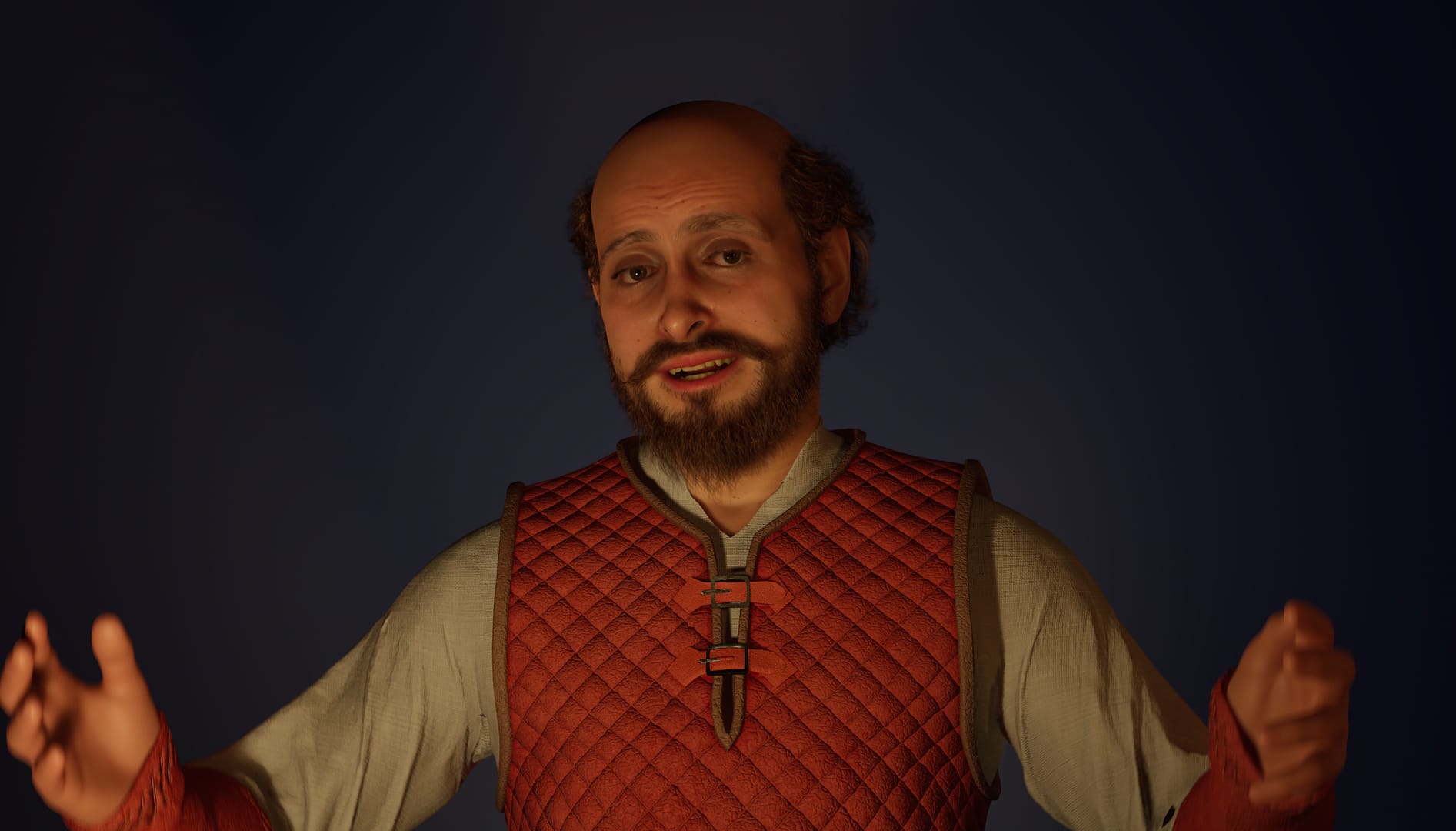
What if you could have a conversation with William Shakespeare? Or ask a sci-fi explorer what she found out on her last expedition?
The Imagination Innovation Lab has been combining photo-realistic digital avatars with conversational AI. A character that can actually hold a conversation, instead of looping a script, opens up new ground for brands, museums, theme parks, and training teams. From resurrecting historical figures to building theme park guides that never tire, the results are nothing short of surprising.
The idea
The project brings together two technologies that are impressive on their own and even better in combination.
The first is Epic’s MetaHuman framework, which creates photorealistic digital humans inside Unreal Engine. These are the kind of faces you’d expect to see in a big-budget game or a film. The second is our conversational AI agents, which handle the difficult parts of holding a conversation: understanding what you say, working out a sensible reply, and speaking it back in a voice that actually sounds human.
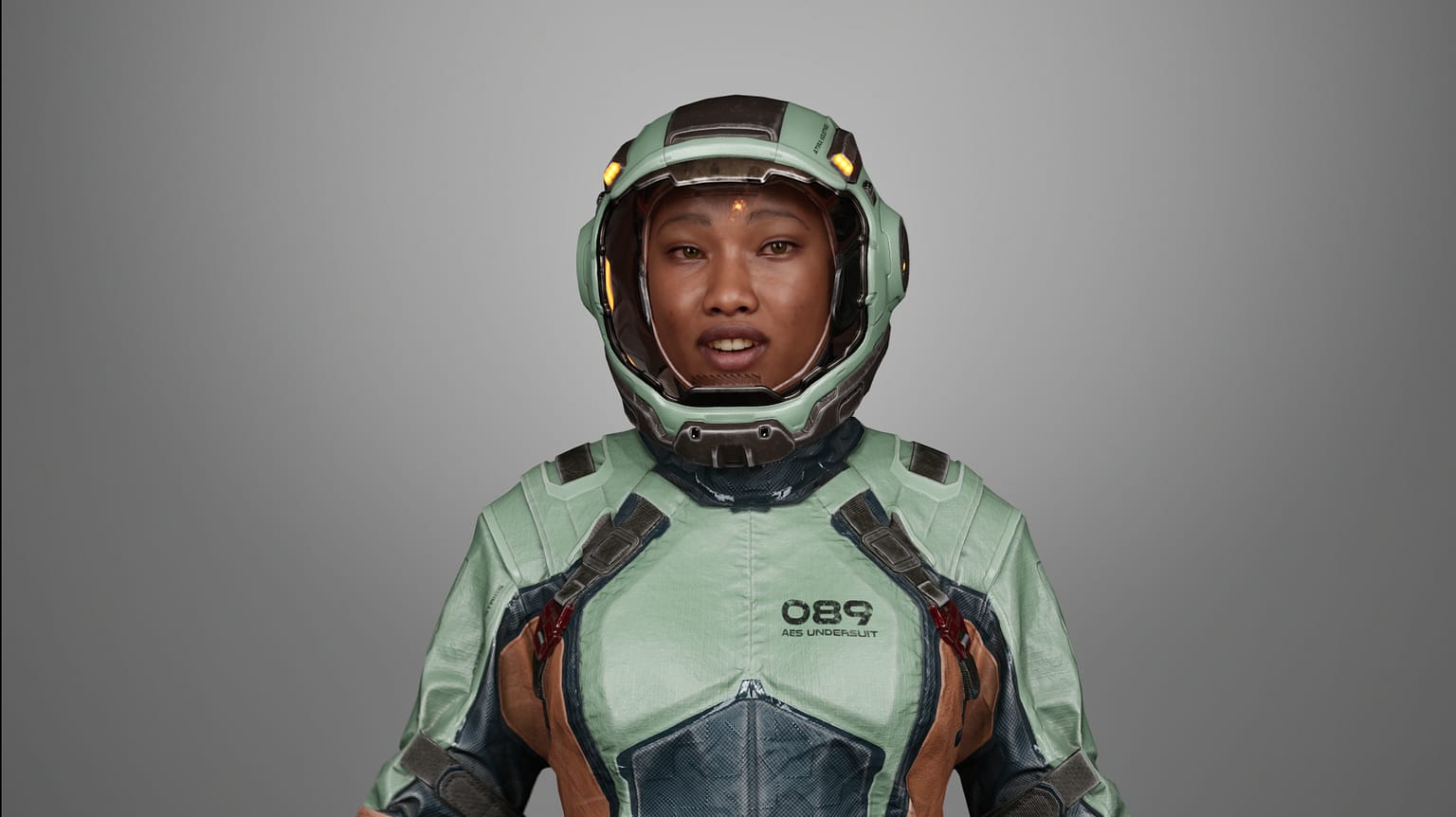
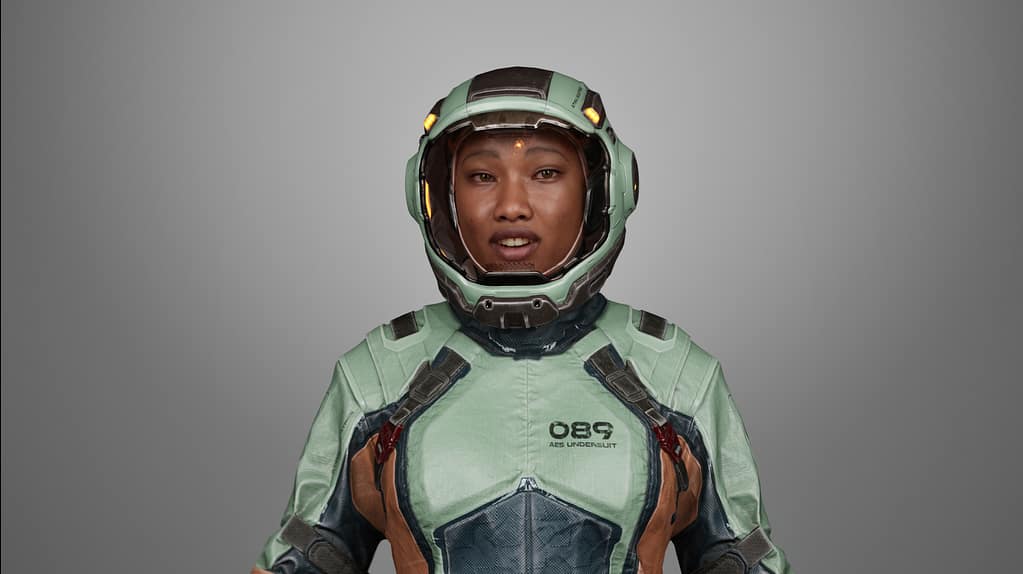
We’ve built two characters so far. One is a theatrical, quick-witted Shakespeare who is happy to turn your question into something clever. The other is a futuristic explorer with a very different personality and voice. They each have their own personality and knowledge, but they run on the same underlying system.
Can they speak to each other?
Getting a MetaHuman and an AI agent to talk to each other is surprisingly hard. They use different audio rates, different formats, and different protocols. So we wrote a small piece of middleware that sits between Unreal Engine and the AI agent that does the translation in real time.
When you speak, your microphone audio streams from Unreal into the middleware. It resamples that audio from 48kHz down to the 16kHz that the AI agent works with, converts the format, and passes it along in small chunks. The agent’s spoken reply comes back the other way, and the middleware hands it to Unreal, which plays it through the speakers and drives the character’s lip-sync so the mouth matches the words.
Most of the real effort went into the small stuff; real-time audio is fussy. Even a tiny gap between chunks produces a click, and a single click is enough to break the whole illusion. We spent a lot of time smoothing those transitions out; adding very short fades to the beginning and end of each piece of audio so the voice never pops, and draining the audio buffers carefully whenever a conversation gets cut off.
Making the character feel alive
Getting the voice right is only half the job. If the face doesn’t behave like a real one, people notice straight away, even if they can’t say why.
The first piece of this is animation. A character that holds perfectly still between sentences looks frozen and lifeless, so we give each one a set of idle animations for when they’re listening or waiting, with small shifts in posture and weight, and a separate set of more active movements for when they’re talking. Switching between these two states is what stops the character from feeling like a paused video and makes them read as present in the room with you.
Next is the mouth. We use a plugin that drives lip sync in real time, analysing the incoming audio as it arrives and shaping the mouth to match. Because it works from the audio itself rather than a pre-baked animation, it keeps up no matter what the character says or when they say it, which matters a lot when the dialogue is being generated live.
The eyes do a surprising amount of work too. We make a point of having the character look towards the viewer, so it feels like they’re actually talking to you rather than staring off into the middle distance, and we add natural blinking so the gaze never turns into an unsettling stare. These are small touches, but they’re the difference between a face that feels aware of you and one that feels like a mannequin.
If you start talking while the character is mid-sentence, it stops and listens, the way a real person would. Polishing the experience required careful attention to the smaller technical details. We sequence the audio engine by feeding it a brief moment of silence to stabilise before signalling Unreal to halt, ensuring the transition is smooth and free from jarring audio cuts.
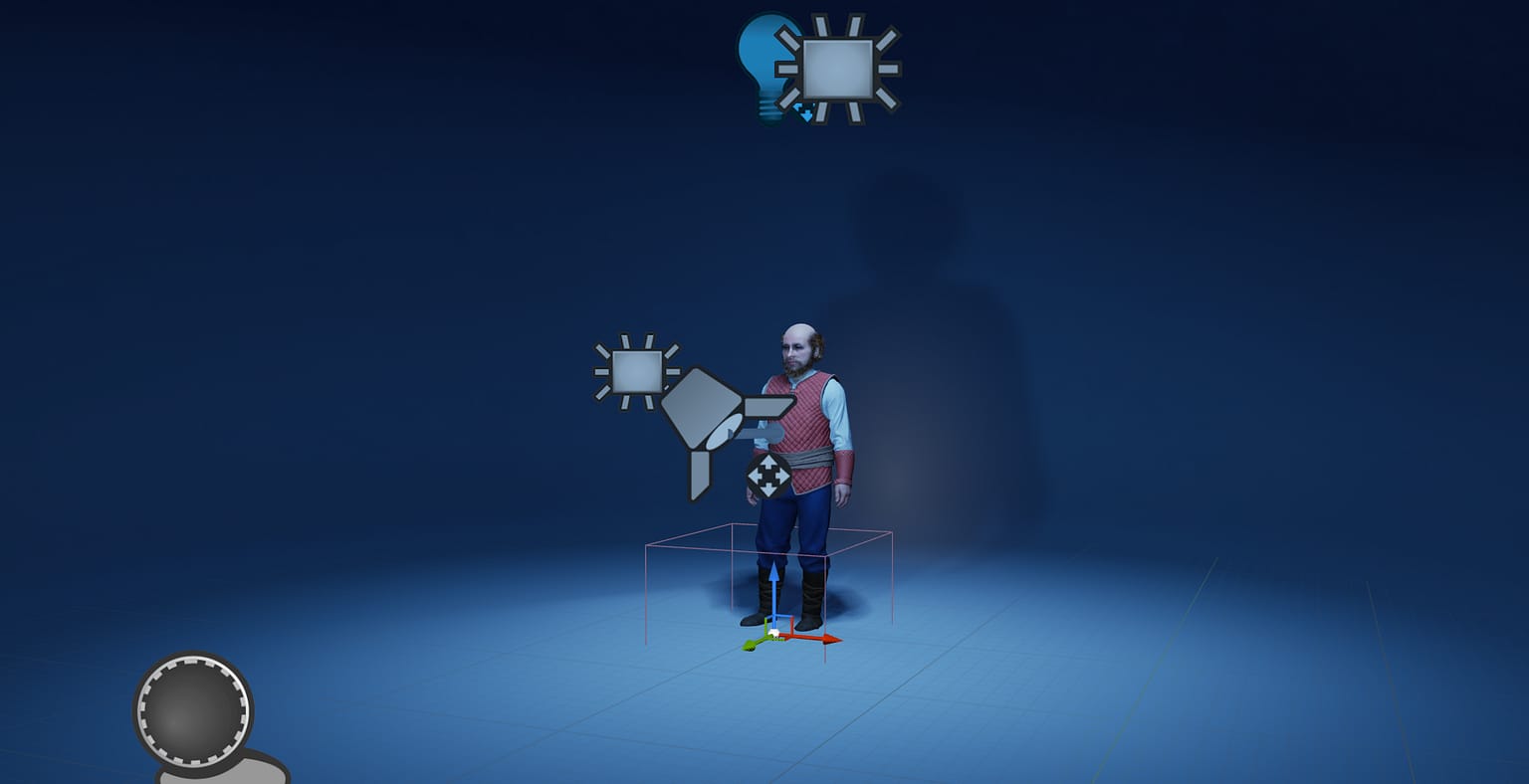
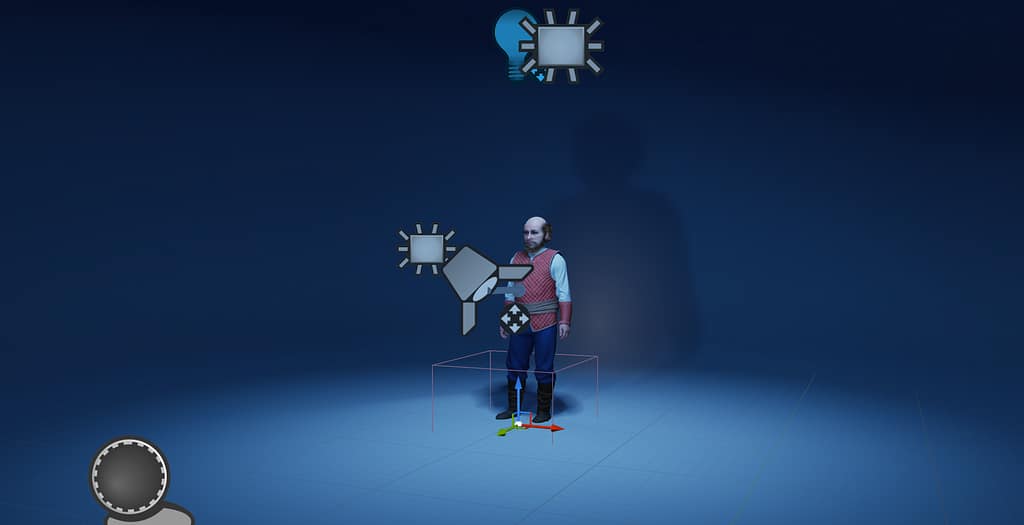
MetaHuman does a lot of the heavy lifting when it comes to making the characters look real, but lighting and setting matter just as much. A digital avatar needs to sit convincingly in its environment. For our prototype, this was as simple as using a coloured backdrop, much like a real photoshoot, but you could easily imagine taking it further and dropping Shakespeare onto a recreation of his own Globe theatre.
Where this could go
The same setup could work across a lot of different industries, and that’s the part we keep coming back to.
In retail and events, a brand could put a character on a screen that greets people, answers questions about products, and actually holds a conversation instead of looping a pre-recorded video. Museums and visitor attractions could offer a guide that never gets tired and can go as deep as the visitor wants, or bring a historical figure to life so people can question them directly. Theme parks and immersive experiences could give their characters real dialogue rather than a fixed script.
Training and education teams could build a character that role-plays difficult conversations, whether that’s a customer complaint, a medical scenario, or a language lesson with someone who responds naturally. Reception areas, showrooms, and information desks could use a friendly face to handle the first round of questions before a person steps in.
Behind the piece

More like this



September 24, 2026