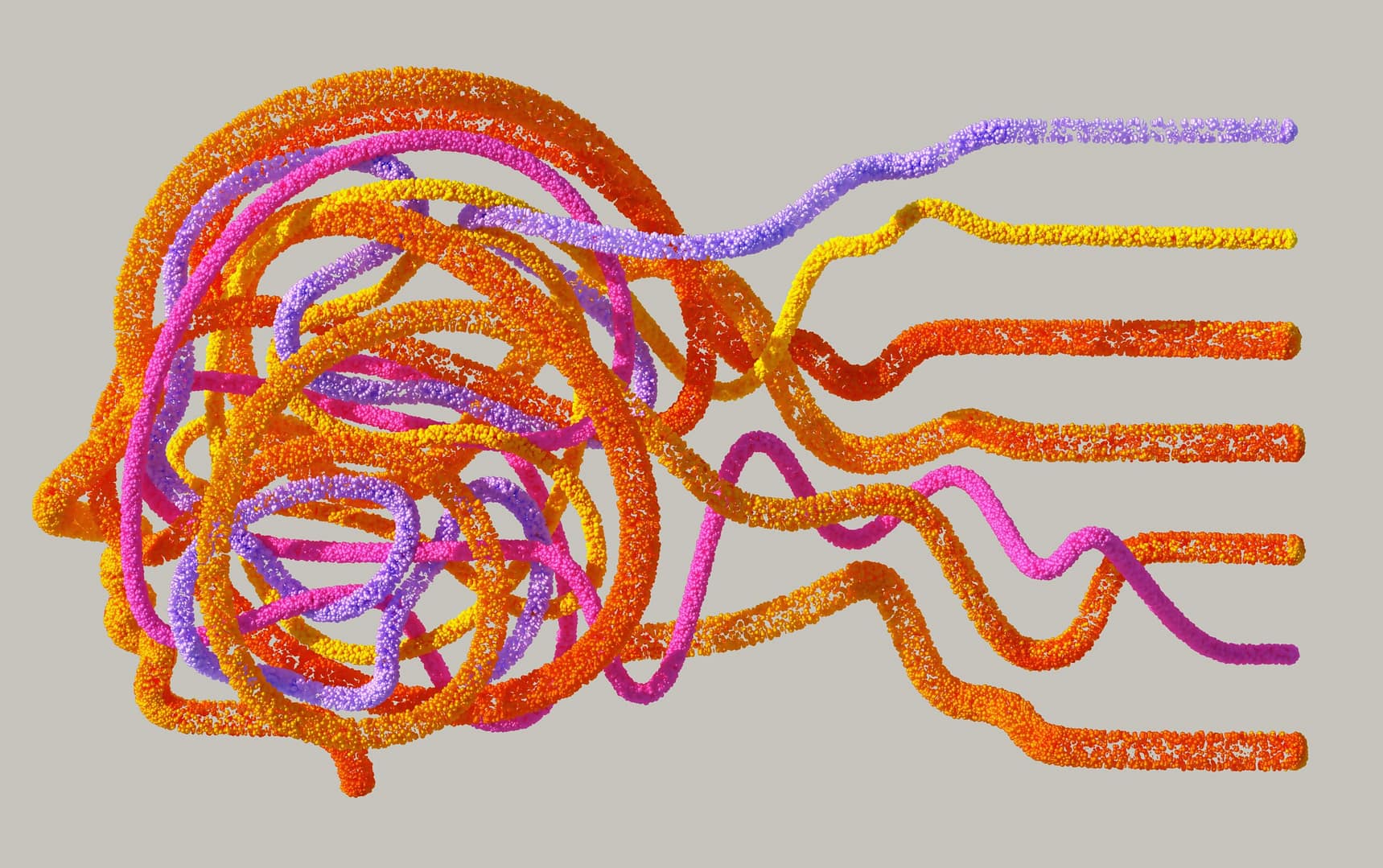
With AI producing instantly gratifying results, Rob Leeks, Creative Director, warns against defaulting to it for every brief.
These days, everyone’s got an opinion on AI, especially in creative industries. There are those who think AI has the potential to replace creative teams entirely, versus the anti-AI purists. I think the truth lies somewhere in between these two points of view. For all its current issues and controversies, AI isn’t going anywhere. Whilst incredibly useful, overreliance on it could kill true creative thinking.
There’s no denying that AI has democratised the creative process. Now, creatives of all experience levels can build accomplished artwork without using expensive tools or toiling for hours on end.
This transformation is not only technical, but behavioural.
With the instantly gratifying results that AI can deliver, the risk is that creatives could become addicted. They start turning to it for every brief and lose the ability – or at least the motivation – to think and create for themselves. And that’s not how great work is made.
For creative leaders, it can feel impossible to find the right balance between the ease and affordability of AI versus the impact of overreliance. To understand what leaders can do, we need to look at why we create, what the psychological effects of AI are and where we can protect organic thinking.
Why do we create?
Unlocking this problem starts with understanding the effect of creating. What drives us to think of new ideas or craft a piece of art?
According to the National Library of Medicine, creating bolsters mental well-being, giving you a sense of accomplishment and triggering a dopamine hit. I’m no psychologist, but I’d agree that when we use our creative muscles, we feel that jolt of happiness knowing that we’ve made something we can be proud to put our name to.
Creative ideas only really work when they are embedded in human truth.
Rob Leeks Creative Director
The emotional rewards of creating aren’t new, but it’s crucial to remind ourselves how our psychology works as we work with generative AI. On several occasions, colleagues and peers have likened using generative AI to operating a fruit machine – when you pull the lever to see what you get. In AI’s case, you write the prompt, hit ‘go’ and hope you win. This behaviour is at the very least highly pattern-forming, and at worst, compulsively habitual.
The immediate high
When you develop with AI, the speed at which you can create means you get that dopamine reward far quicker and more often. It’s only natural that you’d want to chase that feeling.
But the danger of this immediate high is becoming over-reliant on it. When feeling good is as convenient as this, it’s very hard to persuade yourself to create anything the old-fashioned way: with hard work, time and patience.
Shortening the time between the idea and the end result, combined with the ‘spin the reels’ effect of prompting, is where the addictive nature of AI creation becomes clear. Creatives may not all be conscious of the danger that this poses, and it’s up to creative leaders to educate their teams and learn boundaries to protect original thought.
Social media’s warning
The astonishing thing about all of this is the warning we’ve already received from the addictiveness of social media. Growing unruly without regulation, the instant gratification from social media cultivated a generation of shrinking attention spans, obsessed with scrolling so they keep enjoying the emotional highs offered by the platforms.
In her book, Dopamine Nation: Finding Balance in the Age of Indulgence, Anna Lembke, a psychiatrist at Stanford University School of Medicine, called the smartphone “the modern-day hypodermic needle, delivering digital dopamine 24/7.”
You couldn’t ask for a clearer warning.
We need to learn from these mistakes as AI use increases. By consciously building processes that balance AI’s effectiveness and protect organic creative ideation, we have the chance to curb the compulsion for a healthier relationship with this transformative tech.
Protecting organic ideas
Creative leaders have a responsibility to encourage free thinking in their teams while adopting AI. It’s a particularly tricky tightrope to walk, but it’s the only way to ensure that creativity remains as impactful as possible.
Aside from the obvious developmental reasons, it’s good for business. Creative ideas only really work when they are embedded in human truth. If you lose that, you risk missing the mark and harming the success of your work.
I’d suggest it’s imperative that creative leaders re-emphasise the importance of the ‘organic brainstorm’ where possible. Brainstorming skills are essential for creatives to practice idea generation that not only responds to a brief, but challenges it and explores the crazier paths while you look for a golden idea. AI shouldn’t be in the room.
Whilst it’s tempting to get easy answers quickly for the expediency of project delivery, if you don’t tell your team the brief beforehand, they don’t have a chance to look up quick answers via AI. I’d describe this as leaving space to generate the spark – where you foster the opportunity for a moment of genius. People can then build on each other’s authentically human-made ideas.
AI can then be a tool used to enhance and quickly bring colour to the core thought. From environmental design to a shot-by-shot storyboard, AI can deliver visual and interactive examples that bring ideas to life in a fraction of the time it used to take.
Championing processes like these are how we retain the skill of creative thinking. While the world argues the pros and cons of AI use, we can achieve a harmony between organic ideas while reaping the benefits of the tech that’s changing everything.
If we do this successfully and leave space for the spark, we’ll continue to generate inspired creative work and receive dopamine hits that are truly earned.
This article first appeared in Creativebrief written by, Rob Leeks, Creative Director from our London studio.
Behind the piece

More like this

September 24, 2026
Beyond the viewport: Why the real world always re-writes your render
September 01, 2026