Twenty-five years ago when the term ‘challenger’ was first codified by strategist Adam Morgan, the concept belonged to underdogs whose lofty ambitions exceeded their resources. Today, challenger status can be attained by any brand willing to adopt a mindset disruptive of the status quo. Having escaped its original container, ‘challenger’ has become a set of behaviours embraced by brands of all sizes, categories and competitive positions.
No longer do we view challenger status as a growth phase, but as an operating system. And, if challenger thinking is the OS, experiential is the interface through which it becomes visible and felt. Brands sustain challenger energy by putting the approach into practice throughout an organisation. We see this at Patagonia, where brand activations go beyond messaging to embody the organisation’s sustainability ethos and supply chain politics.
Just as challenger brands break stale norms and category complacency, their marketing should do the same. In this way, challengers don’t defend brand territory, they create it. A challenger is no longer simply a market position defined by not being number one, it is a deliberate strategic posture that shapes how a business chooses to compete, behave, and show up in the market.
Despite the shifts over time for this definition of ambition, a willingness to embrace high-impact approaches, often harnessing a bold idea versus a big budget has not wavered. Experiential marketing is the natural expression of that boldness, it cannot be skipped or scrolled past and it demands presence in a way that other formats don’t replicate. As the noise of digital advertising blares ever louder, and with audience trust in traditional media continuing to erode, experiential marketing and events have emerged as the most powerful tool in the challenger playbook.
In 2026, we see brands doubling down on their commitment to appearing live. According to reporting from Forbes, the global experience economy has already surpassed the $1 trillion mark globally, and is racing toward $1.2 trillion by 2030, driven by live events, attractions, and immersive entertainment.
The tenets of experiential challenger strategy
When challenger brands show up live through events and experiences, they leverage the power to translate their resolve into something people can feel, remember and talk about. Live mediums are where a challenger’s greatest purpose can be lived as they move audiences beyond messaging to embodied action and invite us to experience, participate in, and ultimately carry forward the change the brand stands for. To do this effectively, challenger brands anchor their experiential strategy across four foundational principles.
1. Cultural visibility
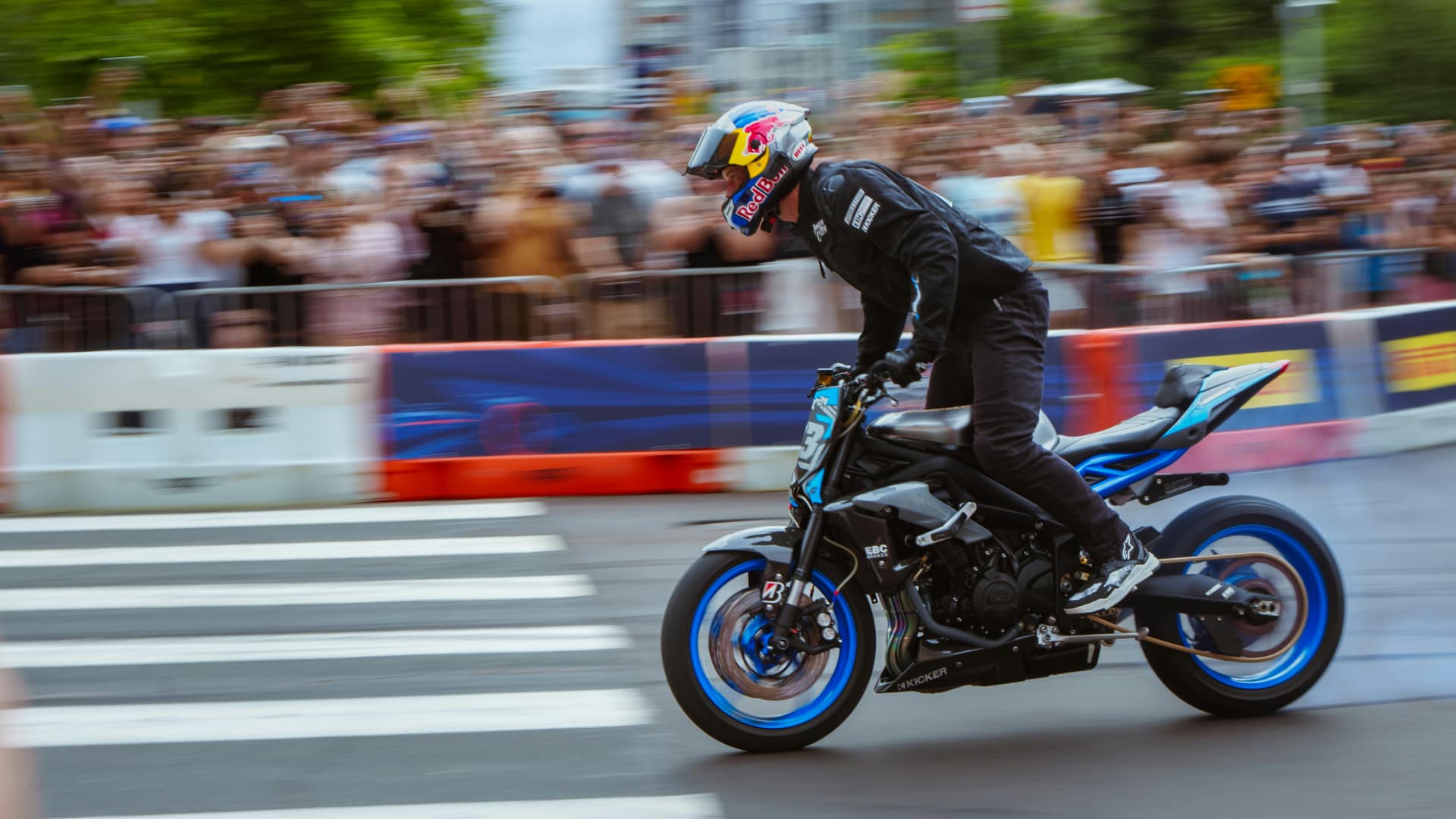
Experiences are often positioned at the intersection of a relevant cultural moment to earn attention. Red Bull commands global attention not as a beverage business, but as an adventurous lifestyle brand. It creates and sponsors its own cultural events, from extreme sports competitions to art conventions, that are impossible to ignore.
Challenger brands don’t just buy their way into culture; the most powerful ones perpetuate it. Cultural visibility requires a deliberate point of view on an organisation’s cultural fit and alignment and the discipline to show up there with consistency. That same consistency has helped Red Bull maintain strong market share in the growing global energy drinks category.
2. Community amplifies
Community is not the outcome of a great event, it becomes the mechanism of its impact. Gymshark understood this early, turning a digital fitness following into physical gatherings where belonging was forged in person and broadcast back out to the world. 98% of event attendees create and share content, enabling a live moment of 500 people to reach an audience of 500,000. Gather people around a shared passion and you invite them to live with you outside of the algorithm, where memorable human connection is made (while still reaching those who haven’t left the sofa).
3. Conceptual originality
As adaptable as the challenger mindset is to any business or brand, we see it falter when committees dilute concepts into executions that lack a clear and resonant idea. Successful experiences become remarkable when a strong strategic concept is executed with excellence, retaining its conceptual edge at scale.
Over the past decade, Airbnb’s ‘Night At’ series has driven 600%+ revenue growth by offering overnight stays in unique locations from Dracula’s Castle in Transylvania to Abbey Road Studios, London.
4. Creative conviction
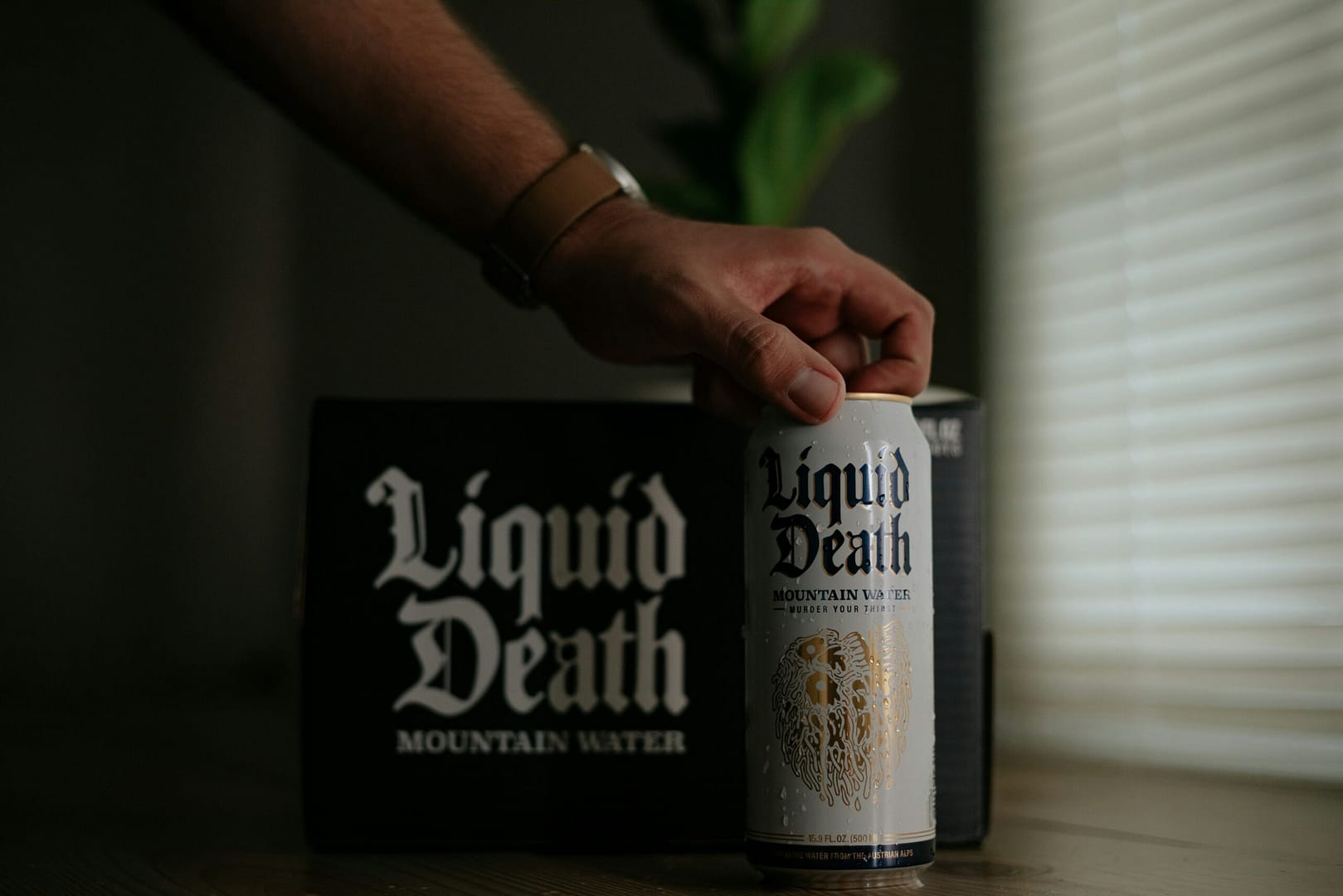
The challenger advantage used to be viewed as a financial constraint which led to simplicity, whereas now we see the power of a challenger as a willingness to back a single creative idea. Liquid Death water runs every activation and event through the same filter, making fans feel like they are participating in a joke against traditional corporate branding. Dark-humour, free airbrushed tattoos and Grim Reapers as ushers create a distinct brand of culture as entertainment while catering to a growing population of non-drinkers through the ‘Death to Plastic’ ethos behind its aluminium cans.
In the meantime, premium canned water with punk metal branding has achieved a billion-dollar valuation and major retail distribution while retaining long-term consistency with an unmistakable aesthetic that fully aligns with brand belief. By refusing to dilute creativity into a zone of safety (equaling forgettable), challengers assert creative courage and the discipline to protect and run with their bold ideas.
The numbers tell the story
Current investment in experiential is backed by the preferences of the demographic cohorts that will continue to shape consumption for the next two decades. Both millennials and gen Z reward the brands that show up in their lives, offering a level of engagement that advertising cannot buy. Consumers trust brands they have lived alongside over those they have viewed. They make purchasing decisions collectively, socially and often in the wake of a shared moment. Across today’s emerging spenders, live interaction is not a marketing touchpoint; it is the relationship itself, and it keeps markets moving.
The challenger mindset finds its most potent expression not in campaigns, but in moments, especially the kind of large-scale cultural events that create shared identity and demand we take a side. With major world events like the 2027 Rugby World Cup and the 2032 Brisbane Olympic Games on the horizon, the opportunity for brands to anchor themselves amongst the collective energy of genuine cultural moments is unprecedented. Challengers don’t show up as sponsors with logo placement, but as experience architects seeking genuine participation and lasting relationships to build the type of affinity that media buys cannot replicate.
This article first appeared in Little Black Book written by our Sydney studio.
More like this
August 28, 2025