
How do you develop, test, and scale a complex digital solution for the world’s largest sporting event?
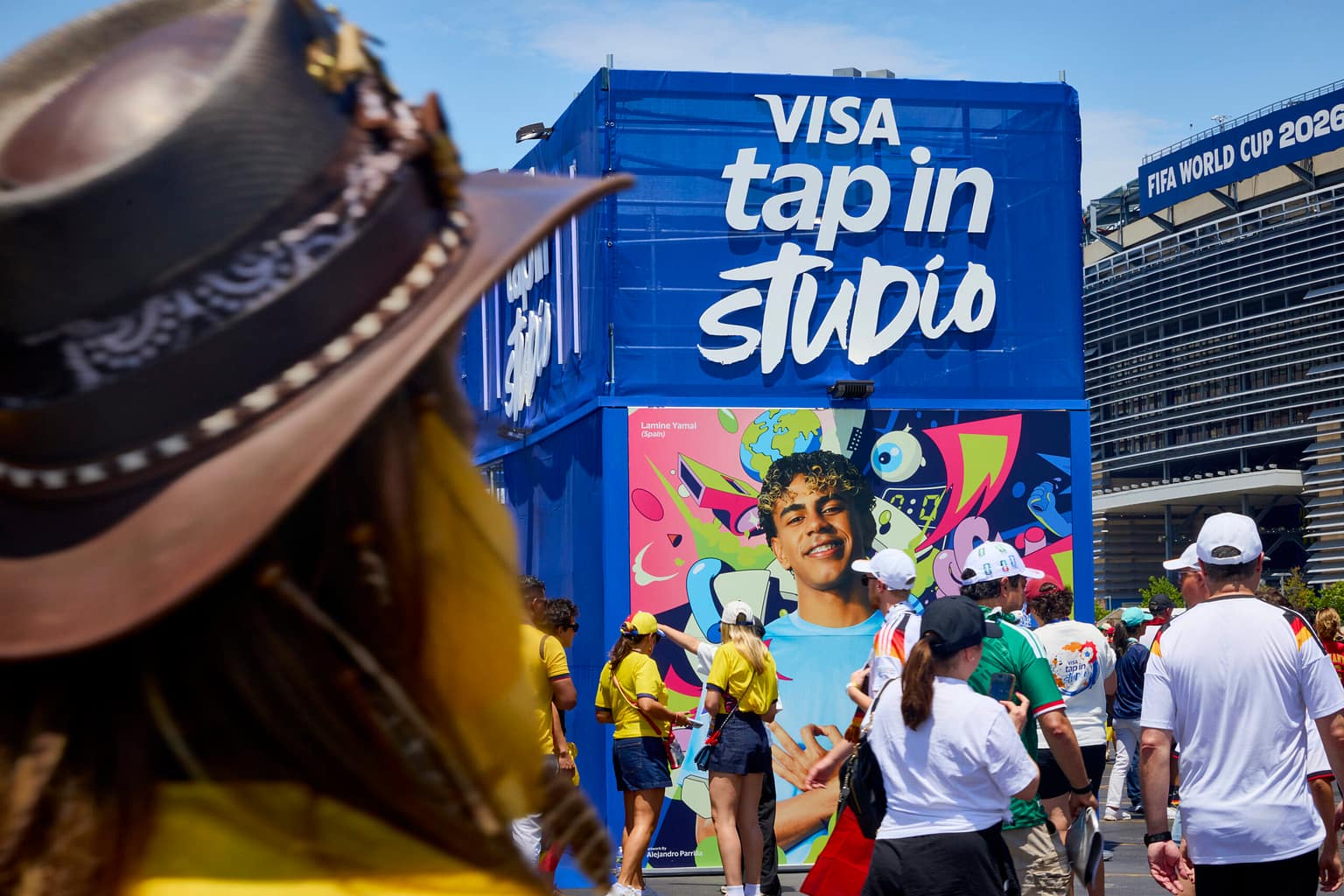
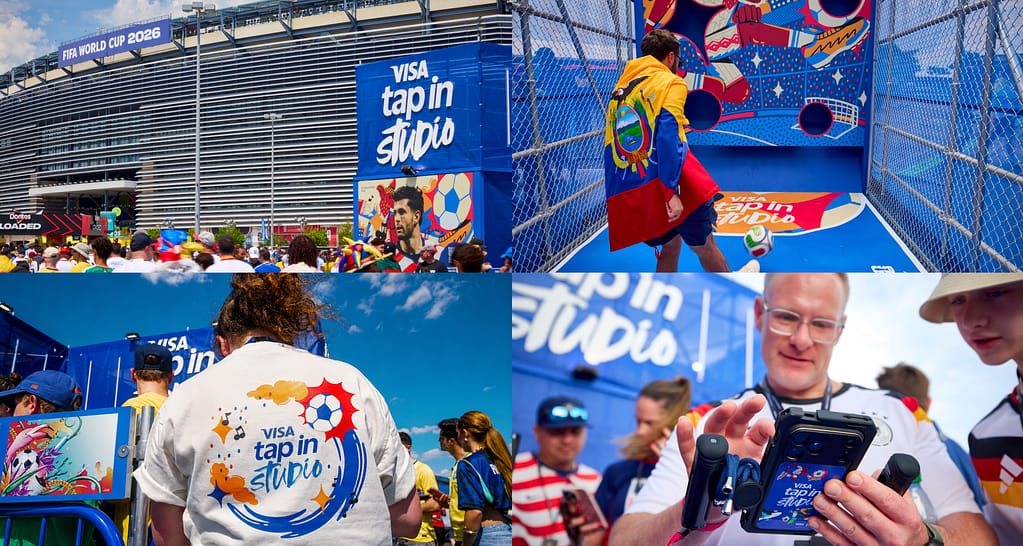
As part of Visa’s ‘Tap In’ campaign, we launched the Tap In Studio, a football-themed activation at LA’s USSF and three 2026 FIFA World Cup stadiums. We wanted fans to express their passion, connect with the game, and experience Visa’s deep understanding of football culture.
So, how do we go from a simple creative concept to delivering a media-rich experience and personalised souvenir at the world’s biggest sporting event?
Training plan
Delivering a globally scalable, high-end digital solution isn’t dissimilar to training for a significant sporting event. Both demand concerted effort, focus, and dedication. You start by planning, entering into R&D, creating a Proof Of Concept, then testing and proving the theory that can deliver the results needed to get it across the line.
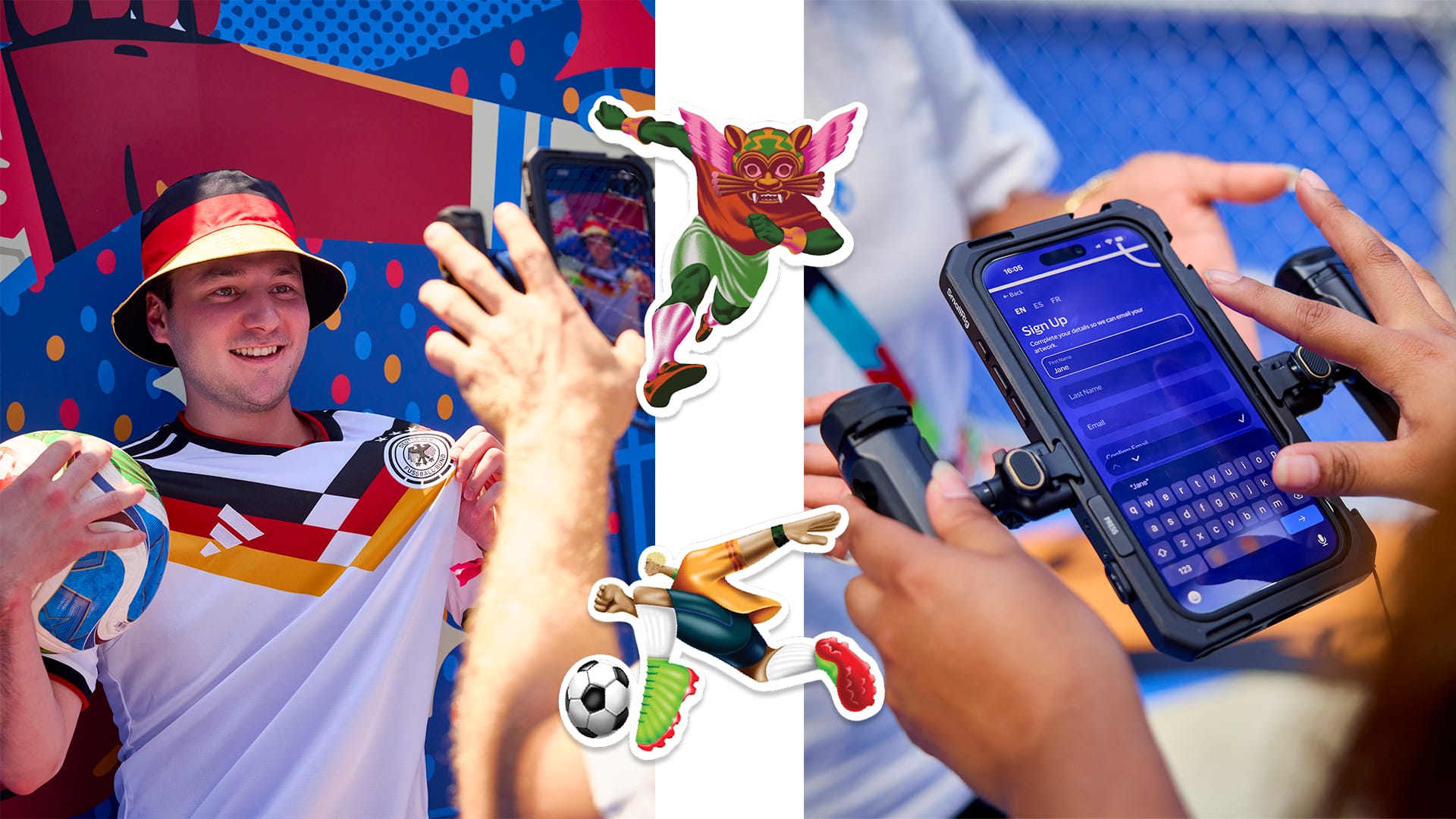
The creative brief was simple: fans visiting the Visa Tap In Studio on matchday have their portrait and action shots captured and merged into a digital sandwich of animated artwork from 11 global artists that have partnered with Visa to celebrate the beautiful game. They then receive this shareable digital souvenir.
The big question is, how do you take the fan’s photo, process and merge it with the artwork time after time, for thousands of fans attending matches at the LA fan zone as well as high profile stadiums in Mexico City, Toronto and New York; guarantee quality, get the digital souvenir processed and emailed, all in the time it takes the fan to smash a ball in the back of the net? Well, you start at the beginning…!
Scouting the market – R&D
The R&D phase is critical for something like this as you enter the unknown. You look for tools, processes and services that can be wired together. At this stage it doesn’t have to be pretty and can be held together with the digital equivalent of string and sticky tape. Prototyping needs to be agile, iterative and adaptable. You must be prepared to fail and go through the drill hall of prototyping to arrive at a solution that is robust and repeatable.
Innovating in this way must have a clear set of goals, parameters and a timeframe that is realistic, but equally does not dig too much into your budget or eat into your timeline. A short 1-2 week sprint is usually sufficient.
The trials – (aka) Prototyping for innovation
The goal is to have something that is cost-effective and robust enough to deploy globally.
So you start with a series of challenges:
- Does anything exist that we can buy off the shelf?
- Can we build something from the ground up?
- Is there a halfway house between the two?
You then break the tasks down into a series of smaller chunks that define what needs to happen at each step of the journey:
- Remove the background from the photo
- Merge the digital sandwich of photo and animation content
- Render it to a single file
- Make it small enough to download and share
The team explored six AI services for background removal, putting each through a series of trials, assessing accuracy, quality, speed, robustness, repeatability and cost.
We faced several technical hurdles, including handling complex noisy backgrounds, correcting facial positioning for animations, resolving motion blur and group shot issues and determining the feasibility of cloud-based processing.
We solved all of these challenges during the R&D phase.
Arrival of the team bus
During the development phase, the team pulled the solution together. Using the AI service, Clipdrop AI, to remove the background from the photo. The image is then sent to AWS for compositing with the animated layers of artwork and rendered to 22 .mp4 animations. Each animation uses artwork from one of the 11 artists that Visa partnered with, one set for the portrait photo and one set for the action shot, so 22 individual .mp4 animations.
The beauty of the AWS system was to use a cloud computing power feature called Step Functions. This would utilise parallel processing across scalable lambdas (servers to you and me) to concurrently generate 22 lightweight downloadable animations that are emailed to the fan to share on social media.
AWS automatically scaled lambdas to meet fluctuating demand, ensuring a robust, cost-efficient solution that only consumed resources when needed.
Match day
The World Cup rollout was well received by fans and the client alike. Across 19 live match days, Tap In Studio processed 12.9k registrations and generated 186.9k digital souvenirs.
Throughout the tournament, the team kept on rolling, the fans kept on coming, and the digital souvenirs kept on being processed and delivered. Starting with the group stages, through the knockout rounds, and all the way to the final. If only the England team were that dependable!
Behind the piece

More like this

September 21, 2026
Connecting leaders, driving action at the Inaugural Europe Gulf Forum
February 25, 2026